
Personal Development as the Foundation of a Healthy Relationship
Updated: Sep 22
Most couples who come to relationship counseling are not failing because they chose the wrong person. They are struggling because neither person has done the interior work that a real partnership demands. Personal development Singapore coaches and therapists see this pattern repeatedly: two adults who genuinely love each other, but who carry unexamined emotional wounds, reactive patterns, and unmet needs that quietly corrode the connection between them. The research is consistent on this point. Self-awareness and self-reflection are cornerstones of healthy, resilient relationships. They allow individuals to handle the complexities of intimacy with more grace and understanding. If you are serious about building a relationship that lasts, the most productive place to start is yourself.
Why Personal Growth Is Not Selfish in a Relationship
There is a persistent myth that focusing on yourself means neglecting your partner. The opposite is true. Two people who invest in their own emotional development bring more patience, honesty, and resilience into the shared space of the relationship. Personal development is not a retreat from the partnership, it is the preparation for it.
When one or both partners stop growing, the relationship tends to stagnate. This is not a metaphor. Stagnation shows up as the same argument repeated for years, as emotional distance that neither person can explain, as a quiet resentment with no clear source. The couple is not broken. They are simply running on an old operating system that neither person has updated.
Working with a life coach Singapore residents trust is often the first step in recognizing this. A skilled coach does not fix a relationship by telling people what to do. The coach creates structured space for each person to examine what beliefs, fears, and habits they are bringing to the partnership and whether those are actually working.
Pro tip: I suggest if you find yourself having the same argument in different forms, stop examining the argument and start examining the feeling underneath it. That feeling almost always has a personal history that predates your current relationship.

Self-Awareness: The Skill That Changes Everything
I noticed of all the personal development skills relevant to relationships, self-awareness has the broadest impact. By understanding your own emotions, triggers, and thought patterns, you can articulate your needs more clearly and listen to your partner with less defensiveness. This is not a soft skill. It is the most practical tool available in any difficult conversation.
I came across psychologist Tasha Eurich has described self-awareness as having two dimensions: knowing yourself internally, and understanding the gap between how you see yourself and how others actually experience you. In relationships, that second dimension is where most of the damage is done. Partners who believe they are being supportive while their behavior reads as controlling, or who think they are being calm while their tone communicates contempt, are operating in that gap.
How to Build Self-Awareness in Practice
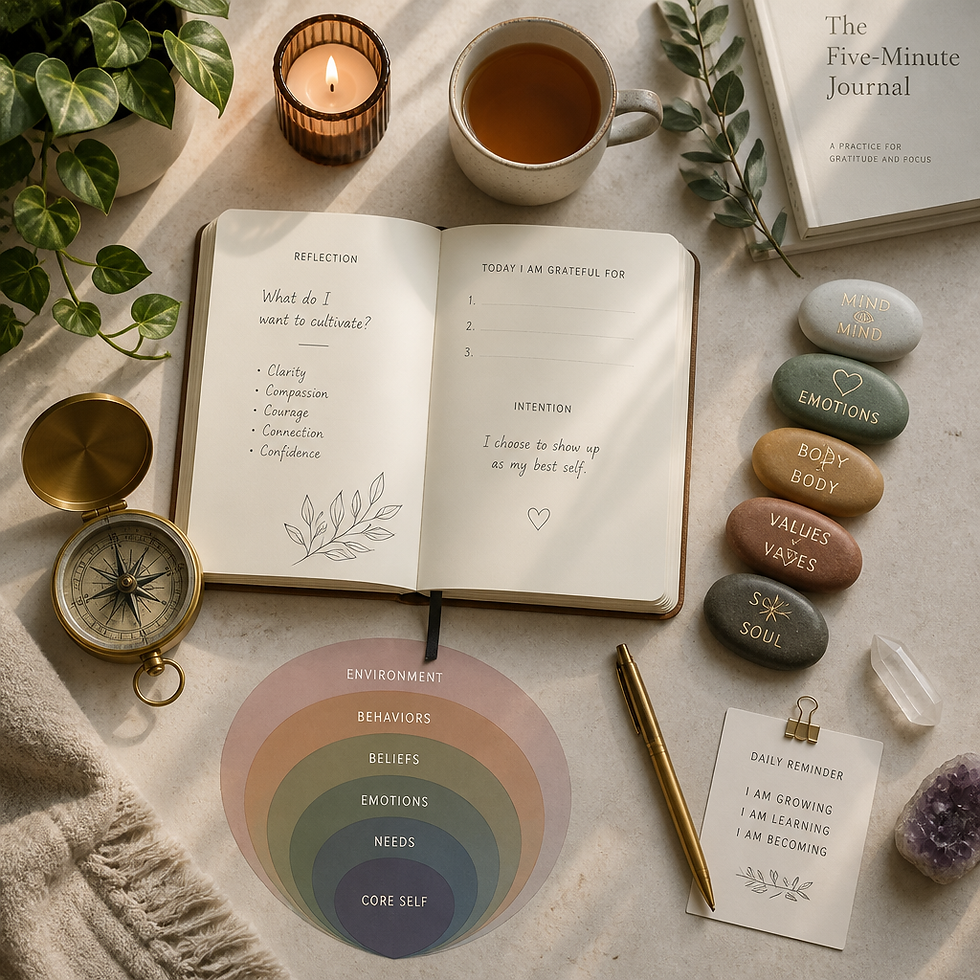
Reflective journaling is one of the most consistently effective tools for developing self-awareness. It is not about writing at length every day. It is about creating a regular moment of honest self-inquiry: What did I feel today? What triggered that feeling? What story did I tell myself about what my partner did, and is that story actually true?
Meditation and structured self-reflection support the same process. In sessions at my work space, Lady SC, clients often discover that the version of events they brought into the room shifts substantially once they sit with the actual feeling rather than the narrative constructed around it. That shift is where real communication improvement begins.
The path to a fulfilling relationship is paved with the stones of self-knowledge and introspection. By investing in understanding ourselves, we not only boost our personal growth but also contribute significantly to the health and happiness of our relationships.
Emotional Wounds and How They Hijack Your Relationship
Attachment wounds, formed in early life or through past relationships, do not disappear when a person enters a new partnership. They travel with that person and shape how they respond to intimacy, conflict, and vulnerability. Someone with an anxious attachment history may read a partner's need for space as rejection. Someone with an avoidant history may shut down emotionally precisely when closeness is most needed. Neither response is irrational from the inside. Both are destructive from the outside.
Understanding your attachment style is not an academic exercise. It is a practical tool for recognizing patterns that are holding you back. The critical insight is this: attachment styles are not fixed. They can shift with new experiences and conscious effort. Developing more secure ways of relating involves learning to trust more deliberately, communicate emotional needs more directly, and regulate emotional responses before they escalate.
When Past Trauma Drives Present Conflict
i observed a common scenario in couples counseling involves one partner reacting to something relatively minor with an intensity that makes no sense to the other person. The surface content of the fight, say a forgotten anniversary or a thoughtless comment, is rarely the real issue. The reaction is disproportionate because it is responding to an older wound, one that says: I am not valued, I am not safe, I will be abandoned.
Addressing this effectively requires more than better communication techniques. It requires working on the wound itself. This is where the combination of professional coaching, hypnotherapy, and NLP at my work space, Lady SC offers something that generic self-help content cannot: a structured, personalized process for identifying and resolving the root emotional barriers, not just managing their symptoms.
Pro tip: I recommend when a conflict feels out of proportion to what actually happened, ask yourself: "Is this the first time I have felt this particular feeling?" The answer will usually point you toward the real source of the reaction, which is almost never your current partner's fault alone.

NLP and Hypnotherapy: Tools for Deeper Self-Change
Most personal development work happens at the conscious level: reading, journaling, talking. This is valuable. But a significant portion of the beliefs and behavioral patterns that damage relationships operate below conscious awareness. This is where NLP and hypnotherapy become genuinely useful tools rather than novelties.
NLP, or Neuro-Linguistic Programming, offers specific techniques for identifying how a person internally represents their experience and then deliberately shifting those representations. NLP techniques such as reframing can help individuals regulate emotional responses, shift unresourceful states, and build new patterns of relating. In a relationship context, this might mean dismantling the internal belief that disagreement equals danger, or that asking for emotional support means weakness.
Hypnotherapy for Relationship Patterns
Hypnotherapy works by accessing the subconscious mind where many of these patterns are stored. It is not about losing control or being manipulated. It is a guided state of focused attention that allows a person to examine and revise deeply held beliefs with less interference from the conscious mind's defenses.
For clients at my work space, Lady SC who have struggled with recurring emotional patterns in their relationships, hypnotherapy often accelerates progress that talk-based approaches alone have not achieved. The combination of NLP, hypnotherapy, and personalized coaching addresses personal development not just at the level of behavior but at the level of the underlying programming that drives it. This is what distinguishes a genuine transformation from a temporary adjustment.
Self-Improvement as a Relationship Strategy
Self-improvement in a relationship context is not about becoming a better person in the abstract. It is about becoming a better partner in the specific. That requires identifying the particular ways in which your current habits, reactions, and beliefs are creating friction in your relationship, and then doing targeted work to change them.
This is different from generic self-improvement. Reading productivity books will not help you manage the wave of contempt you feel when your partner dismisses your concerns. Learning to cook better will not address the emotional withdrawal you default to when you feel criticized. The self-improvement that matters for relationships is specific: emotional regulation, active listening, recognizing projection, communicating needs without blame, and tolerating vulnerability without deflecting.
Growing Together Without Losing Yourself
One risk that rarely gets mentioned in relationship advice is the temptation to over-adapt to a partner at the expense of your own identity. Healthy personal development in a relationship context means growing as an individual while also growing as a partner. These are not competing goals. A person with a clear sense of their own values, needs, and identity is a far more reliable partner than one whose sense of self depends entirely on the relationship's health.
In practice, this means that working on yourself includes understanding what you actually want, what you genuinely need, and where your real boundaries are, not the boundaries you have learned to perform, but the ones that protect your capacity to show up fully in the relationship. Life coaching in Singapore increasingly addresses this dual focus: personal clarity as the foundation for relational health.
What a Life Coach in Singapore Actually Does for Couples
Life coaching in Singapore has expanded significantly, and the range of practitioners and approaches varies widely. What a genuinely effective life coach does for an individual or couple is not to provide advice, fix decisions, or tell people who they should be. The work is about helping a person define clear and actionable goals, identify the internal obstacles blocking those goals, and build accountability structures that ensure progress continues between sessions.
For someone dealing with relationship difficulties, this process often reveals that the primary obstacle is not a communication deficit but an unexamined belief. A belief about whether they deserve love, whether conflict always leads to abandonment, or whether vulnerability is actually safe with this person. Surfacing those beliefs is most of the work. Changing them is the rest.
Why Ongoing Support Matters
One meaningful difference between working with a dedicated relationship and life coaching practice like myself, Lady SC and a one-off consultation is the continuity of support. Real behavioral change does not happen in a single session. It happens through repeated practice, honest feedback, and the ability to debrief when the new patterns break down, because they will initially. My WhatsApp support between sessions is not a bonus feature. It is a recognition that life does not pause while personal development work is in progress.
Regular coaching sessions that review progress, explore challenges, and celebrate real improvements are structured to turn insight into durable change. This is what distinguishes professional coaching from reading about relationship psychology on your own, however useful that may be as a starting point.
Frequently Asked Questions
How does personal development actually improve a relationship?
Personal development improves a relationship by increasing self-awareness, emotional regulation, and the ability to communicate honestly without defensiveness. When a person understands their own triggers, needs, and behavioral patterns, they stop attributing all relationship problems to their partner and start taking genuine responsibility for their own contribution. That shift alone transforms the dynamic in a partnership.
Can one partner do personal development work if the other refuses to?
Yes, and it is often where the process has to start. When one partner changes how they show up, speak, and respond in the relationship, the dynamic between them changes regardless of whether the other partner is actively working on themselves. A single person doing genuine personal development work often creates enough of a shift that the other partner becomes curious or motivated to engage. It is not a guarantee, but it is far more effective than waiting for both people to be ready simultaneously.
What is the difference between life coaching and therapy for relationship issues?
Life coaching focuses on goal-oriented development, building skills, identifying beliefs, and creating accountability for change moving forward. Therapy tends to focus more on diagnosing and healing psychological conditions and past trauma in depth. In practice, the most effective practitioners of relationship and personal development support combine elements of both, which is the approach used at my work space, Lady SC. The right question is not which category the support falls into, but whether it is structured, personalized, and producing real change for you.
How long does personal development work for relationship improvement take to show results?
Meaningful shifts in self-awareness and emotional regulation can occur within a few sessions when the work is well targeted. Deeper changes to attachment patterns, long-standing emotional wounds, or ingrained behavioral habits typically require a longer commitment, usually several months of consistent work. The timeline varies based on the depth of the issue and the consistency of the effort. What remains true is that people who engage with ongoing support and accountability see results significantly faster than those who attempt purely self-directed change.
Is it possible to work on personal development as a couple together, rather than just individually?
Absolutely, and couples work at my work space, Lady SC is built around exactly this premise. Individual personal development and couples work are not alternatives, they are complementary. A couple that explores their individual patterns and emotional histories together, in a structured and supported environment, builds a shared language for understanding each other that most couples never develop. This shared understanding is one of the strongest foundations a relationship can have.
What role does self-improvement play in rebuilding trust after a relationship crisis?
After a betrayal, breakdown, or major conflict, trust is rebuilt through sustained changed behavior, not through promises. Personal development work is what makes changed behavior possible and durable. Without addressing the beliefs and patterns that contributed to the crisis in the first place, both partners risk returning to the same dynamics. Genuine self-improvement by both partners, supported by structured coaching and therapeutic techniques, is the only reliable route to rebuilding real trust rather than a temporary truce.
If something in this article resonated with where you are right now, share your experience in the comments or reach out directly. Your story matters, and you are not alone in navigating this work. Contact me for the matter.
References
How life coaching in Singapore supports personal growth and relationship improvement
A practitioner's guide to understanding and healing attachment wounds in relationships
How to heal attachment wounds and transform relationship patterns through personal growth work


Comments